In stockBestseller
For research use only · Not for human consumption
−24.2%
Largest mean weight change reported
12 mg · 48 weeks · placebo −2.1% (1)
−82.4%
Mean relative liver fat reduction
12 mg · 24 weeks · placebo +0.3% (6)
−2.02
HbA1c points, type 2 diabetes
12 mg · 24 weeks · 281 adults (2)
3
Receptor targets
GLP-1 · GIP · glucagon (7)
Retatrutide is a synthetic peptide developed by Eli Lilly under the code LY3437943. What separates it from the incretin peptides before it is arithmetic: a single molecule engineered to act at three receptors rather than one or two — GLP-1, GIP and the glucagon receptor.
Coskun and colleagues described its discovery and first clinical characterisation in Cell Metabolism in 2022, reporting balanced activity at the glucagon and GLP-1 receptors and greater activity at the GIP receptor (7).
The glucagon arm is the part with no counterpart in single- or dual-agonist peptides, and in the preclinical work published alongside that first characterisation its contribution was different in kind: increases in energy expenditure, added to the reductions in calorie intake driven by the other two receptors (7).
Retatrutide remains investigational. It holds no marketing authorisation anywhere, and every figure on this page describes what happened to trial participants rather than a protocol for anyone to follow.
GLP-1
Glucagon-like peptide-1 receptor
The single target Semaglutide and the earlier incretin peptides act on. The effects attributed to this arm in the published work are reduced calorie intake and slowed gastric emptying.
GIP
Glucose-dependent insulinotropic polypeptide receptor
The second arm that dual agonists such as Tirzepatide add. Of the three receptors, this is where Coskun and colleagues measured the greatest in vitro activity for retatrutide (7).
GCGR
Glucagon receptor
The arm unique to the triple design, and the reason a third receptor was added at all. In the reported preclinical models its contribution was an increase in energy expenditure rather than a further reduction in intake (7).
One trial, 338 adults, 48 weeks. Unlike the comparison further down, every bar here comes from the same trial, so they are directly comparable to each other. The 4 mg and 8 mg groups each ran two dose-escalation schedules, which the trial reports combined.
Placebo
−2.1%
1 mg
−8.7%
4 mg (arms combined)
−17.1%
8 mg (arms combined)
−22.8%
12 mg
−24.2%
Sources. (1) Jastreboff AM, Kaplan LM, Frías JP, et al. Triple-Hormone-Receptor Agonist Retatrutide for Obesity — A Phase 2 Trial. N Engl J Med. 2023;389(6):514–526. Figures are the least-squares mean percentage change in body weight at 48 weeks. Retatrutide is investigational and holds no marketing authorisation in any jurisdiction.
Three Phase 2 read-outs have since been published — in obesity, 338 adults over 48 weeks (1); in type 2 diabetes, 281 adults over 36 weeks (2); and a sub-study of 98 adults with metabolic dysfunction-associated steatotic liver disease, in which the 12 mg group showed an 82.4% mean relative reduction in liver fat at 24 weeks against a 0.3% increase on placebo, with 86% of that group reaching liver fat below 5% (6).
Each bar comes from a different trial, and the trials differ in phase, length, population and design — so these are not head-to-head results. Each placebo arm is the one from that bar's own trial.
Retatrutide 12 mg, 48 wks
−24.2%
Tirzepatide 15 mg, 72 wks
−20.9%
Semaglutide 2.4 mg, 68 wks
−14.9%
Sources. (1) Jastreboff AM, Kaplan LM, Frías JP, et al. Triple-Hormone-Receptor Agonist Retatrutide for Obesity — A Phase 2 Trial. N Engl J Med. 2023;389(6):514–526. (3) Jastreboff AM, Aronne LJ, Ahmad NN, et al. Tirzepatide Once Weekly for the Treatment of Obesity. N Engl J Med. 2022;387(3):205–216. (4) Wilding JPH, Batterham RL, Calanna S, et al. Once-Weekly Semaglutide in Adults with Overweight or Obesity. N Engl J Med. 2021;384(11):989–1002. Retatrutide is investigational and holds no marketing authorisation in any jurisdiction.
Each column reports figures from a different published trial, and the trials differ in phase, length, population and design — so the columns are not a head-to-head comparison. The one exception is the HbA1c row: the Tirzepatide and Semaglutide figures there come from the same trial, in which the two were compared directly.
| Parameter | Retatrutide | Tirzepatide | Semaglutide |
|---|---|---|---|
| Receptor targets | GLP-1, GIP and glucagon | GLP-1 and GIP | GLP-1 |
| Weight trial cited here | Phase 2, 338 adults, 48 weeks (1) | SURMOUNT-1, Phase 3, 2,539 adults, 72 weeks (3) | STEP 1, Phase 3, 1,961 adults, 68 weeks (4) |
| Largest mean weight change reported | −24.2% (12 mg) | −20.9% (15 mg) | −14.9% (2.4 mg) |
| Placebo arm in the same trial | −2.1% | −3.1% | −2.4% |
| HbA1c change in type 2 diabetes | −2.02 points at 24 weeks, 12 mg (Phase 2, 281 adults) (2) | −2.30 points at 40 weeks, 15 mg (5) | −1.86 points at 40 weeks, 1 mg (5) |
| Administration in the cited trials | Once weekly, subcutaneous | Once weekly, subcutaneous | Once weekly, subcutaneous |
Sources. (1) Jastreboff AM, Kaplan LM, Frías JP, et al. Triple-Hormone-Receptor Agonist Retatrutide for Obesity — A Phase 2 Trial. N Engl J Med. 2023;389(6):514–526. (2) Rosenstock J, Frias J, Jastreboff AM, et al. Retatrutide, a GIP, GLP-1 and glucagon receptor agonist, for people with type 2 diabetes: a randomised, double-blind, placebo and active-controlled, parallel-group, phase 2 trial conducted in the USA. Lancet. 2023;402(10401):529–544. (3) Jastreboff AM, Aronne LJ, Ahmad NN, et al. Tirzepatide Once Weekly for the Treatment of Obesity. N Engl J Med. 2022;387(3):205–216. (4) Wilding JPH, Batterham RL, Calanna S, et al. Once-Weekly Semaglutide in Adults with Overweight or Obesity. N Engl J Med. 2021;384(11):989–1002. (5) Frías JP, Davies MJ, Rosenstock J, et al. Tirzepatide versus Semaglutide Once Weekly in Patients with Type 2 Diabetes. N Engl J Med. 2021;385(6):503–515. Cited elsewhere on this page: (6) Sanyal AJ, Kaplan LM, Frias JP, et al. Triple hormone receptor agonist retatrutide for metabolic dysfunction-associated steatotic liver disease: a randomized phase 2a trial. Nat Med. 2024;30(7):2037–2048. (7) Coskun T, Urva S, Roell WC, et al. LY3437943, a novel triple glucagon, GIP, and GLP-1 receptor agonist for glycemic control and weight loss: from discovery to clinical proof of concept. Cell Metab. 2022;34(9):1234–1247.e9.
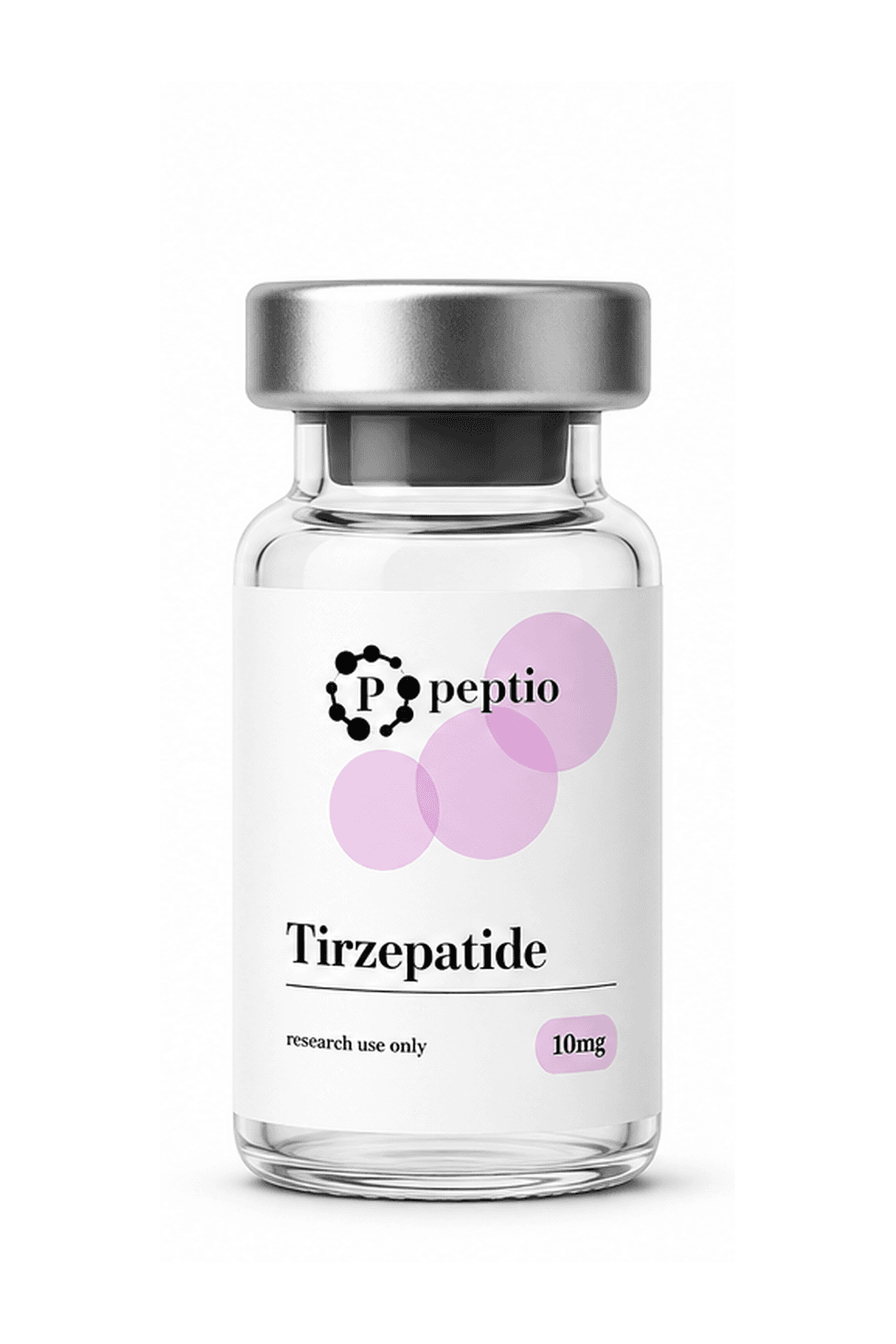
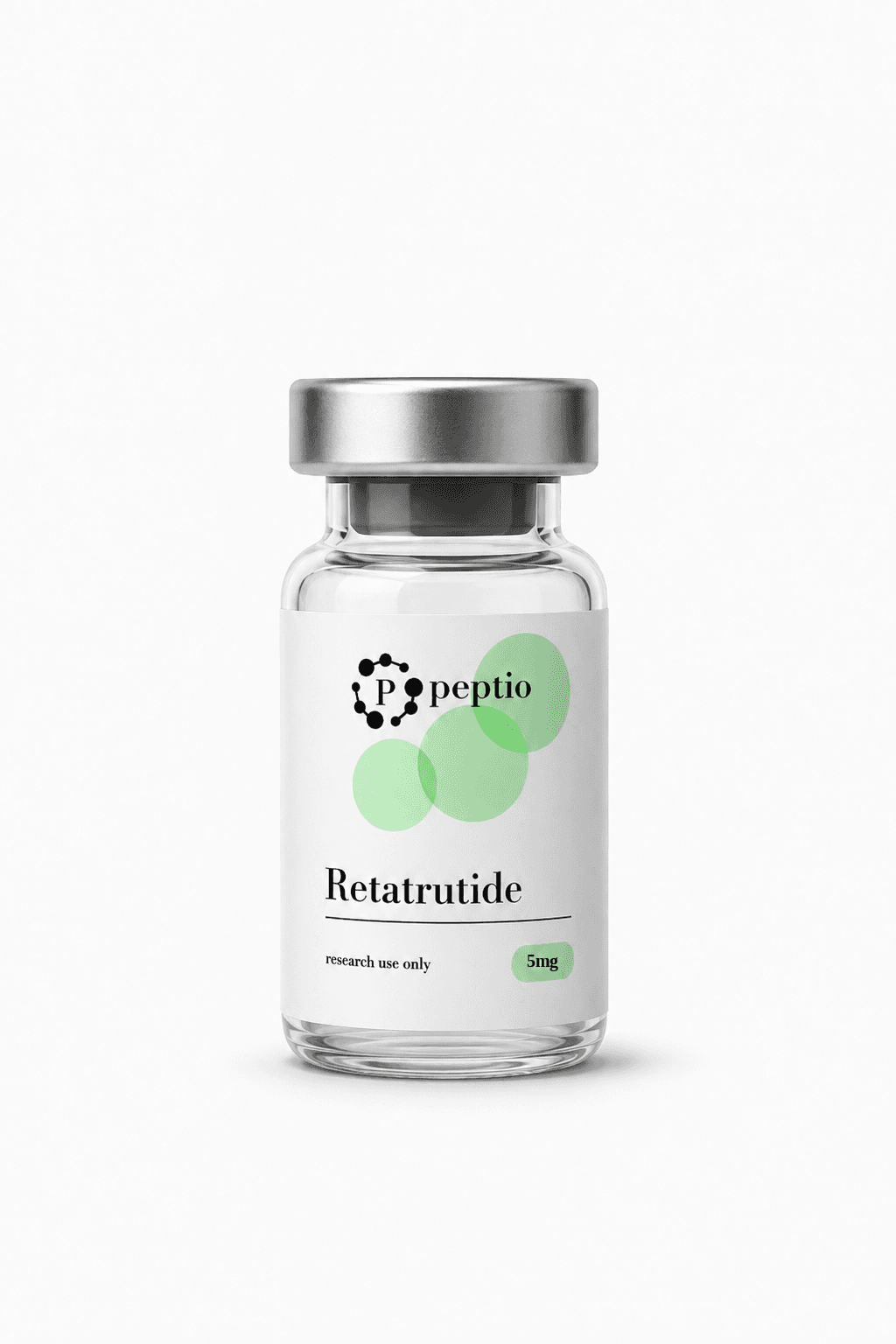
A sealed vial of lyophilised powder, in a 5 mg or a 10 mg size. Both are the same material; the difference is the mass in the vial, not the concentration — concentration is set later, by how much solvent is added.
Each batch is released against a certificate of analysis from an independent issuer, and the batch number printed on the vial matches the number on that certificate. Checking those two against each other is the most useful thing to do with a delivery. The purity, form, storage condition and molecular weight recorded for the current batch are in the specifications above.
Handling is the same as for every other compound in the catalogue. The handling protocol below covers storage temperatures, solvent choice and the concentration calculation.
Research use only
Retatrutide is an investigational compound with no marketing authorisation in any jurisdiction. Peptio is not a pharmacy and supplies it for research use only — not for human or veterinary consumption. Everything reported on this page comes from published trials and describes their participants; none of it is guidance for use in people.
Every compound Peptio ships arrives as a sealed vial of lyophilised powder. Freeze-drying is what keeps it stable in transit: with the water removed and the vial closed, the peptide keeps far longer than it would in solution. The protocol below applies to all of them, and it is the same protocol whichever compound is in the vial.
The steps that matter most happen in the first few minutes after a vial is opened, and in how the prepared solution is labelled afterwards. A vial with no recorded solvent volume is a vial with no known concentration, and no amount of care later recovers that.
01
Inspect on arrival
Check that the crimp seal and stopper are intact and that the powder cake is dry and unbroken. Compare the batch number printed on the vial with the number on the certificate of analysis. A cake that has slumped into a film, or a vial that arrives loose in its packaging, is worth photographing before anything else is done to it.
02
Equilibrate before opening
Let a vial taken from cold storage stand sealed until it reaches room temperature. Opening cold glass in a warm room pulls condensation onto it, and moisture is the one thing a desiccated powder is being protected from.
03
Add the solvent
Direct the solvent slowly down the inner wall of the vial rather than onto the cake, then let it dissolve on its own and swirl gently until the solution runs clear. This takes a minute or two, and it is not helped by shaking.
04
Label, then refrigerate
Write the date, the solvent and the exact volume added onto the vial before it goes anywhere. Keep the prepared solution cold and out of direct light, and check that it is still clear each time it is used.
| Correct | Common mistake |
|---|---|
| Direct the solvent down the inner wall of the vial and let the cake dissolve on its own. | Drive the solvent onto the powder in a fast stream. |
| Swirl gently until the solution runs clear. | Shake or vortex the vial — mechanical agitation and foaming degrade peptide structure. |
| Let a vial from cold storage reach room temperature while it is still sealed. | Open a vial straight out of the freezer, and pull condensation into a product that is kept dry on purpose. |
| Label every prepared vial with the date, the solvent and the volume added. | Rely on memory — two vials that look identical at 2–8 °C can hold two different concentrations. |
| Draw through the stopper with a fresh sterile needle each time. | Prise off the crimp seal; an open vial cannot be kept sterile. |
| Keep prepared solution cold and shielded from light between uses. | Leave a reconstituted vial standing at room temperature on the bench. |
| Look at the solution before every use and confirm it is clear. | Use a solution that has turned cloudy or thrown a visible particle. |
Solvent volume sets the concentration
The mass of peptide in a vial is fixed at manufacture. The only variable is how much solvent goes in, and it changes every measurement that follows — 2 mL instead of 1 mL halves the concentration. Confirm the vial's usable capacity before adding anything, since a 2 mL vial will not take 3 mL, and write down the volume you actually added.
Questions
0.0
0 reviews
No reviews yet.