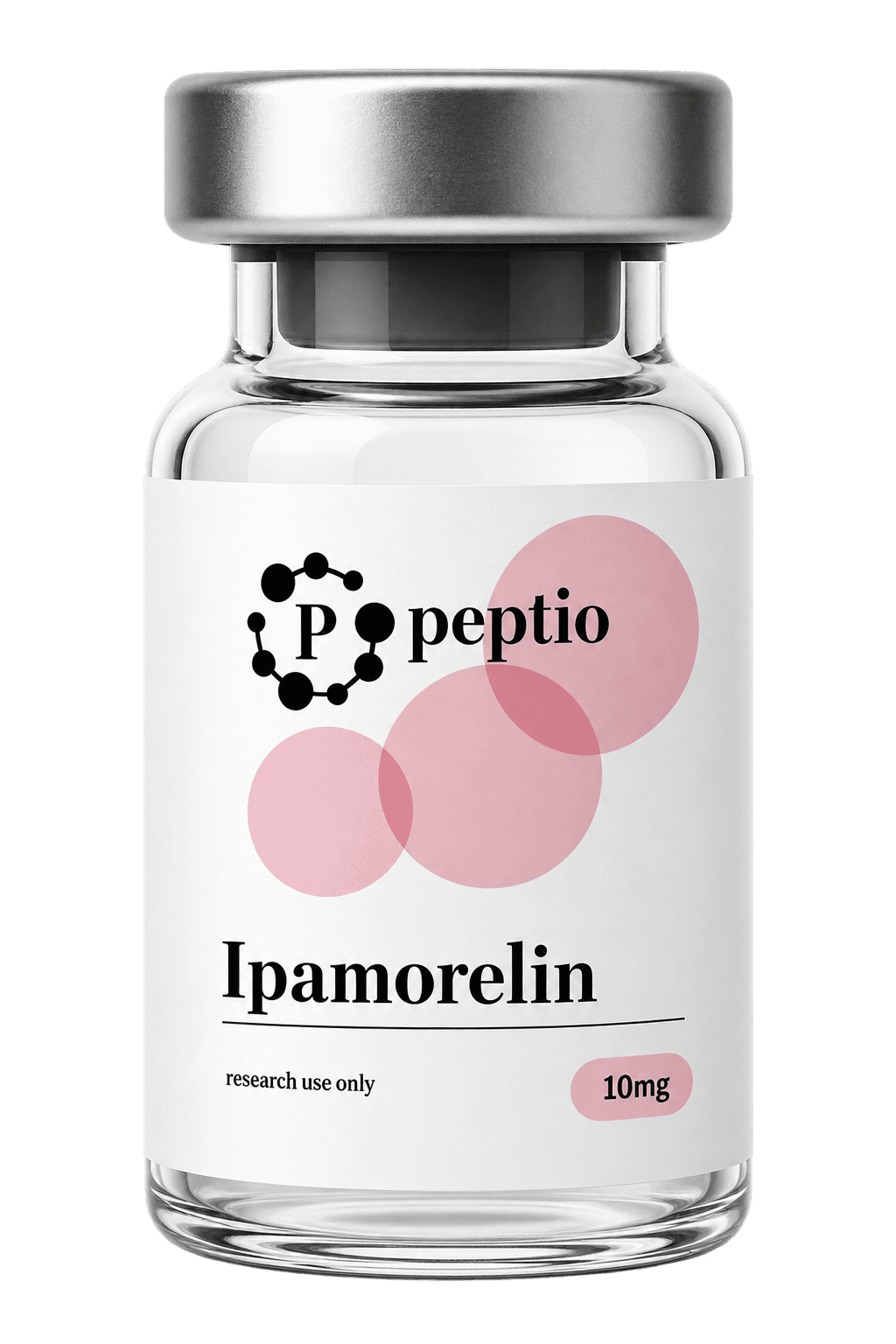
In stock
- Batch verified
- Temperature controlled
- Discreet packaging
- Purity
- 99.3%
- Form
- Lyophilised powder
- Molecular weight
- 813.9 g/mol
- Storage
- -20°C, desiccated, protected from light
- Batch
- B-2408-117
For research use only · Not for human consumption
About this compound
What can and cannot be concluded from this page
Semax is a registered medicine in Russia and appears on that country's List of Vital and Essential Drugs for Medical Application (1). It holds no marketing authorisation in the European Union, the United Kingdom or the United States, and a search of the ClinicalTrials.gov registry returns no registered study of it (13, 16). Its clinical literature is largely Russian-language, in journals with limited indexing, and the one human report located for this page states its methods but not its effect sizes. That is why this page carries no headline figures and no chart: registration in one jurisdiction and a published, checkable result are different things, and nothing below is written as though they were the same.
Semax is a synthetic heptapeptide with the sequence Met-Glu-His-Phe-Pro-Gly-Pro (3). Its first four residues are ACTH(4-7) — the Met-Glu-His-Phe stretch of adrenocorticotropic hormone, which also occurs at the corresponding position in alpha-melanocyte-stimulating hormone (3). The three residues that follow come from nowhere in the hormone at all.
That substitution is the whole design. The parent fragment ACTH(4-10) ends in Arg-Trp-Gly; Semax ends instead in the tripeptide Pro-Gly-Pro, and the published work describes what results as a non-corticotropic analogue of the ACTH(4-10) fragment (2) — a piece of a hormone that does not behave as one. Radchenko and colleagues state that the peptide exhibits no hormonal activity, and that the added Pro-Gly-Pro affords increased resistance to peptidase activity (1). Sudarkina and colleagues describe the same tail as stabilising the C-terminus and giving the molecule greater metabolic stability (3).
So one modification does two jobs: it takes away the corticotropic activity of the parent fragment and it slows the enzymes that would otherwise dismantle the sequence. Degradation studies report stepwise cleavage, with pentapeptides and the Pro-Gly-Pro tripeptide among the predominant products rather than rapid loss of the whole molecule (8, 12).
Semax was developed in Russia and is used there clinically; the peer-reviewed literature describes it as a peptide used in the treatment of ischaemic stroke (3), and it appears on the Russian List of Vital and Essential Drugs for Medical Application by government decree (1). Outside Russia it is not an approved medicine. The sections below keep those two facts apart, because they are not evidence of the same kind.
One fragment, one tail
ACTH(4-7)
The part kept from the hormone
Met-Glu-His-Phe, the fourth to seventh residues of adrenocorticotropic hormone. The same stretch occurs at the corresponding position in alpha-melanocyte-stimulating hormone, which is why the published work groups Semax with the melanocortin derivatives rather than with the hormone itself (3).
Pro-Gly-Pro
The part that replaced the rest
A tripeptide carried at the C-terminus in place of the Arg-Trp-Gly that ends the parent ACTH(4-10) fragment. Radchenko and colleagues report that it affords increased resistance to peptidase activity (1); Sudarkina and colleagues describe it as stabilising the C-terminus and affording greater metabolic stability (3).
No hormone
What the substitution removes
Both reports above describe the resulting heptapeptide as having no hormonal activity, and a 2024 study of the same molecule names it a non-corticotropic analogue of the ACTH(4-10) fragment (1, 2, 3). This is a claim about what the molecule is, not about anything it has been shown to do in a person.
The mechanism the published work proposes
The mechanism most often examined runs through the neurotrophins — brain-derived neurotrophic factor and nerve growth factor — rather than through any receptor effect measured directly. Shadrina and colleagues treated rat basal forebrain glial cultures with Semax and found the largest change in messenger RNA levels 30 minutes later (6). Dolotov and colleagues then reported the same direction of effect in living animals after intranasal application, in the hippocampus (4) and in the basal forebrain (5).
The same group reported specific, reversible, calcium-dependent binding of tritium-labelled Semax to plasma membranes taken from rat basal forebrain (5). What that binding site is has not been established in the material located for this page, and the papers do not claim otherwise.
In experimental stroke the work is largely transcriptomic. Filippenkov and colleagues sequenced rat brain 24 hours after transient middle cerebral artery occlusion and reported that Semax suppressed the expression of genes related to inflammatory processes and activated the expression of genes related to neurotransmission — the reverse of the pattern that ischaemia-reperfusion produced on its own (7). That is a description of gene expression in a rat brain. It is not a clinical outcome, and the paper does not present it as one.
What the cited studies measured
- Rat hippocampus, a single intranasal application at 50 µg/kg body weight: a maximal 1.4-fold increase in BDNF protein, a 1.6-fold increase in trkB tyrosine phosphorylation, a 3-fold increase in exon III BDNF messenger RNA and a 2-fold increase in trkB messenger RNA (4).
- Rat basal forebrain glial cultures, in vitro, 30 minutes after treatment: BDNF messenger RNA increased eight-fold against control, and NGF messenger RNA five-fold (6).
- Rat basal forebrain plasma membranes: specific binding of tritium-labelled Semax, dependent on calcium ions, with a dissociation constant of 2.4 ± 1.0 nM and a Bmax of 33.5 ± 7.9 fmol/mg protein (5).
- Rat basal forebrain in vivo, 3 hours after intranasal application at 50 and 250 µg/kg: BDNF levels rose in the basal forebrain, but not in the cerebellum (5).
- Rat brain 24 hours after transient middle cerebral artery occlusion: 394 genes differentially expressed by more than 1.5-fold under Semax against saline (7).
- Every figure in this list was measured in a rodent or in a cell culture. None of them is a measurement in a person, and none of them is an outcome.
How the cited studies were run
- Route in the neurotrophin work
- Intranasal, in the studies reporting BDNF changes in the rat hippocampus and basal forebrain (4, 5)
- Route in the experimental stroke work
- Intraperitoneal injection at 100 µg/kg, in the ischaemia-reperfusion model (3)
- Species and models
- Rat primary glial and neuronal cultures; rat transient middle cerebral artery occlusion; transgenic APPswe/PS1dE9 mice (1, 3, 6, 7)
- Human report located
- 110 adults after ischaemic stroke — 43 men, 67 women, mean age 58.0 ± 9.7 years (9)
- Timing in that report
- Two rehabilitation groups: early, 89 ± 9 days after the stroke; late, 214 ± 22 days (9)
- Regimen in that report
- Two courses of 6000 µg per day for 10 days, with a 20-day interval. Given here as the study's design, because its findings cannot be read without it (9)
- Endpoints in that report
- Plasma BDNF, motor performance on the British Medical Research Council scale, and the Barthel index (9)
- Registered trials
- A search of the ClinicalTrials.gov registry returns no registered study of Semax (16)
What the human literature reports, and what it does not
One human report was located for this page. Gusev and colleagues examined 110 adults after ischaemic stroke, divided into an early and a late rehabilitation group and each of those subdivided into participants given semax and participants not (9). The report states that plasma BDNF levels rose and stayed high in the semax subgroups, and that administration of semax was associated with faster improvement and a better final Barthel index score.
It does not state by how much. There are no group-level outcome values, no confidence intervals and no p-values, and the abstract does not describe randomisation or blinding. A figure cannot be lifted out of a sentence that does not contain one, so no stroke or rehabilitation outcome number appears anywhere on this page — no chart, no figure row, no comparison cell. What is reported above from that study is its design, and only its design.
The wider picture is the same shape. A 2026 review that searched regulatory databases as well as the literature records Semax as not approved in the West and finds no independent Western validation, noting that decades of use in Russia have not been accompanied by systematic safety surveillance through Western regulatory frameworks (13). Registration in one jurisdiction is a real fact and it is recorded plainly here; it is simply not the same fact as a result anyone outside that jurisdiction has checked.
Against Selank, the other cognitive peptide in this catalogue
Semax and Selank come from the same Russian research lineage and share a C-terminal tripeptide, which makes this a structural comparison rather than a clinical one. No study has compared the two head to head for any outcome, so the table reports what each molecule is and what the cited work examined. The one exception is the enkephalin-degrading enzyme row, where both values were measured in a single assay in a single paper (10).
| Parameter | Semax | Selank |
|---|---|---|
| Sequence | Met-Glu-His-Phe-Pro-Gly-Pro (3, 10) | Thr-Lys-Pro-Arg-Pro-Gly-Pro (10, 11) |
| Parent molecule | The ACTH(4-7) fragment of adrenocorticotropic hormone (1, 3) | The tuftsin tetrapeptide Thr-Lys-Pro-Arg (11, 12) |
| Shared element | C-terminal Pro-Gly-Pro (1, 3) | C-terminal Pro-Gly-Pro (11, 12) |
| What the shared tail is credited with | Increased resistance to peptidase activity, and the loss of the parent fragment's hormonal activity (1, 2, 3) | Stability comparable to that of established preparations, in the review that groups both peptides as Pro-Gly-Pro-containing (14) |
| Pathways examined in the cited work | BDNF and NGF expression and trkB activation; inflammatory and neurotransmission gene expression after experimental ischaemia (4, 5, 6, 7) | Positive allosteric modulation of GABA binding; inhibition of enkephalin-degrading enzymes (10, 11) |
| Inhibition of enkephalin-degrading enzymes in human serum, one shared assay | IC50 10 µM (10) | IC50 20 µM (10) |
| Route used in the cited studies | Intranasal in the neurotrophin studies and in the human report (4, 5, 9) | Intranasal in the pharmacokinetic study cited here (12) |
| Evidence stage | Rodent and cell-culture work, plus Russian clinical reports (1, 4, 5, 6, 7, 9) | Rodent and cell-culture work, plus Russian clinical reports (10, 11, 15) |
| Marketing authorisation in the EU, the UK or the US | None (13) | None (15) |
Sources. (1) Radchenko AI, Kuzubova EV, Apostol AA, et al. The Potential of the Peptide Drug Semax and Its Derivative for Correcting Pathological Impairments in the Animal Model of Alzheimer's Disease. Acta Naturae. 2025;17(4):110–120. (2) Inozemtseva LS, Yatsenko KA, Glazova NY, et al. Antidepressant-like and antistress effects of the ACTH(4-10) synthetic analogs Semax and Melanotan II on male rats in a model of chronic unpredictable stress. Eur J Pharmacol. 2024;984:177068. (3) Sudarkina OY, Filippenkov IB, Stavchansky VV, et al. Brain Protein Expression Profile Confirms the Protective Effect of the ACTH(4-7)PGP Peptide (Semax) in a Rat Model of Cerebral Ischemia-Reperfusion. Int J Mol Sci. 2021;22(12):6179. (4) Dolotov OV, Karpenko EA, Inozemtseva LS, et al. Semax, an analog of ACTH(4-10) with cognitive effects, regulates BDNF and trkB expression in the rat hippocampus. Brain Res. 2006;1117(1):54–60. (5) Dolotov OV, Karpenko EA, Seredenina TS, et al. Semax, an analogue of adrenocorticotropin (4-10), binds specifically and increases levels of brain-derived neurotrophic factor protein in rat basal forebrain. J Neurochem. 2006;97 Suppl 1:82–86. (6) Shadrina MI, Dolotov OV, Grivennikov IA, et al. Rapid induction of neurotrophin mRNAs in rat glial cell cultures by Semax, an adrenocorticotropic hormone analog. Neurosci Lett. 2001;308(2):115–118. (7) Filippenkov IB, Stavchansky VV, Denisova AE, et al. Novel Insights into the Protective Properties of ACTH(4-7)PGP (Semax) Peptide at the Transcriptome Level Following Cerebral Ischaemia-Reperfusion in Rats. Genes. 2020;11(6):681. (8) Zolotarev YA, Dolotov OV, Inozemtseva LS, et al. Degradation of the ACTH(4-10) analog Semax in the presence of rat basal forebrain cell cultures and plasma membranes. Amino Acids. 2006;30(4):403–408. (9) Gusev EI, Martynov MY, Kostenko EV, Petrova LV, Bobyreva SN. The efficacy of semax in the treatment of patients at different stages of ischemic stroke. Zh Nevrol Psikhiatr Im S S Korsakova. 2018;118(3 Pt 2):61–68. Published in Russian. (10) Kost NV, Sokolov OY, Gabaeva MV, et al. Semax and selank inhibit the enkephalin-degrading enzymes from human serum. Bioorg Khim. 2001;27(3):180–183. Published in Russian. (11) Vyunova TV, Andreeva L, Shevchenko K, Myasoedov N. Peptide-based Anxiolytics: The Molecular Aspects of Heptapeptide Selank Biological Activity. Protein Pept Lett. 2018;25(10):914–923. (12) Zolotarev YA, Dadayan AK, Dolotov OV, et al. Evenly tritium-labeled peptides and their in vivo and in vitro biodegradation. Bioorg Khim. 2006;32(2):183–191. Published in Russian. (13) Mavrych V, Shypilova I, Bolgova O. Therapeutic peptides in gerontology: mechanisms and applications for healthy aging. Front Aging. 2026;7:1790247. (14) Ashmarin IP, Samonina GE, Lyapina LA, et al. Natural and hybrid (chimeric) stable regulatory glyproline peptides. Pathophysiology. 2005;11(4):179–185. (15) Doyno CR, White CM. Sedative-Hypnotic Agents That Impact Gamma-Aminobutyric Acid Receptors: Focus on Flunitrazepam, Gamma-Hydroxybutyric Acid, Phenibut, and Selank. J Clin Pharmacol. 2021;61 Suppl 2:S114–S128. (16) ClinicalTrials.gov registry, US National Library of Medicine; a search for Semax returns no registered study. Semax holds no marketing authorisation in the European Union, the United Kingdom or the United States.
What Peptio ships
A sealed vial of lyophilised powder, in a 10 mg or a 30 mg size. Both are the same material; the difference is the mass in the vial, not the concentration — concentration is set later, by how much solvent is added.
Each batch is released against a certificate of analysis from an independent issuer, and the batch number printed on the vial matches the number on that certificate. Checking those two against each other is the most useful thing to do with a delivery. The purity, form, storage condition and molecular weight recorded for the current batch are in the specifications above.
Handling is the same as for every other compound in the catalogue. The handling protocol below covers storage temperatures, solvent choice and the concentration calculation.
Research use only
Semax holds no marketing authorisation in the European Union, the United Kingdom or the United States. Its registration in Russia is a fact about Russian regulation and confers nothing anywhere else. Peptio is not a pharmacy and supplies this compound for research use only — not for human or veterinary consumption. Everything reported on this page comes from published studies and describes their animals, their cultures or their participants; none of it is guidance for use in people.
Handling and storage
Every compound Peptio ships arrives as a sealed vial of lyophilised powder. Freeze-drying is what keeps it stable in transit: with the water removed and the vial closed, the peptide keeps far longer than it would in solution. The protocol below applies to all of them, and it is the same protocol whichever compound is in the vial.
The steps that matter most happen in the first few minutes after a vial is opened, and in how the prepared solution is labelled afterwards. A vial with no recorded solvent volume is a vial with no known concentration, and no amount of care later recovers that.
From delivery to prepared solution
01
Inspect on arrival
Check that the crimp seal and stopper are intact and that the powder cake is dry and unbroken. Compare the batch number printed on the vial with the number on the certificate of analysis. A cake that has slumped into a film, or a vial that arrives loose in its packaging, is worth photographing before anything else is done to it.
02
Equilibrate before opening
Let a vial taken from cold storage stand sealed until it reaches room temperature. Opening cold glass in a warm room pulls condensation onto it, and moisture is the one thing a desiccated powder is being protected from.
03
Add the solvent
Direct the solvent slowly down the inner wall of the vial rather than onto the cake, then let it dissolve on its own and swirl gently until the solution runs clear. This takes a minute or two, and it is not helped by shaking.
04
Label, then refrigerate
Write the date, the solvent and the exact volume added onto the vial before it goes anywhere. Keep the prepared solution cold and out of direct light, and check that it is still clear each time it is used.
Quick reference
- Form
- Lyophilised powder in a sealed, stoppered vial
- Solvent
- Bacteriostatic water where the vial will be drawn from more than once; sterile water where it will not
- Typical reconstitution volume
- 1–3 mL, chosen to give the concentration the work calls for
- Storage before reconstitution
- −20 °C, desiccated and protected from light
- Storage after reconstitution
- 2–8 °C, protected from light, in the original stoppered vial
- In transit
- Short periods at 2–8 °C are expected; that is what the insulated mailer is for
- Once opened
- Record the date on the vial. How long a prepared solution stays usable depends on the solvent and the storage temperature, so the date is the only reliable reference point.
Handling
| Correct | Common mistake |
|---|---|
| Direct the solvent down the inner wall of the vial and let the cake dissolve on its own. | Drive the solvent onto the powder in a fast stream. |
| Swirl gently until the solution runs clear. | Shake or vortex the vial — mechanical agitation and foaming degrade peptide structure. |
| Let a vial from cold storage reach room temperature while it is still sealed. | Open a vial straight out of the freezer, and pull condensation into a product that is kept dry on purpose. |
| Label every prepared vial with the date, the solvent and the volume added. | Rely on memory — two vials that look identical at 2–8 °C can hold two different concentrations. |
| Draw through the stopper with a fresh sterile needle each time. | Prise off the crimp seal; an open vial cannot be kept sterile. |
| Keep prepared solution cold and shielded from light between uses. | Leave a reconstituted vial standing at room temperature on the bench. |
| Look at the solution before every use and confirm it is clear. | Use a solution that has turned cloudy or thrown a visible particle. |
Solvent volume sets the concentration
The mass of peptide in a vial is fixed at manufacture. The only variable is how much solvent goes in, and it changes every measurement that follows — 2 mL instead of 1 mL halves the concentration. Confirm the vial's usable capacity before adding anything, since a 2 mL vial will not take 3 mL, and write down the volume you actually added.
Working out the concentration
- Concentration (mg/mL) = peptide mass in the vial (mg) ÷ solvent volume added (mL).
- A 5 mg vial with 1 mL of solvent gives 5 mg/mL. The same vial with 2 mL gives 2.5 mg/mL.
- A 10 mg vial with 2 mL of solvent also gives 5 mg/mL — the same concentration from twice the mass.
- Volume (mL) = mass required (mg) ÷ concentration (mg/mL).
- 1 mg/mL is 1,000 micrograms per mL. Convert once, at the start, and hold one unit for the whole calculation.
Questions
About Semax
Delivery
- One delivery option at checkout: standard, 3–5 working days.
- Orders ship in an insulated mailer.
- Delivery is free on orders over €150.00.
- See the Shipping page for the delivery terms in full.
Customer reviews
0.0
0 reviews
- 50
- 40
- 30
- 20
- 10
No reviews yet.
Related compounds
In stock
In stockBestseller
In stockBestseller