In stock
For research use only · Not for human consumption
BPC-157 is a synthetic pentadecapeptide — fifteen amino acids, GEPPPGKPADDAGLV — described in the published work as a partial sequence of a larger protein isolated from human gastric juice, which is where the name Body Protection Compound comes from (1, 3).
The property the literature keeps returning to is that it is reported to remain stable in human gastric juice rather than being broken down there, and to show activity by oral, parenteral and topical routes in animals (1, 7).
The evidence behind those reports is animal and in vitro, and it is worth saying so before anything else. A systematic review of the musculoskeletal literature published in 2025 screened 544 records and included 36 studies: 35 preclinical, and one retrospective clinical report. It recorded that no clinical safety data were found (6). No controlled trial in people has published an efficacy result, no Phase 2 trial has been completed, and no pharmaceutical formulation has been approved anywhere (6, 7, 8).
A second limitation matters as much as the first and is less visible. Most of the published records carrying the name BPC 157 come from one research group in Zagreb, and a 2025 review argues that this reliance on self-replication restricts how far the findings generalise and raises the risk of confirmation bias; independent groups have contributed comparatively little (9). None of that makes the reported findings wrong. It does mean they have largely not been checked by anyone else.
Everything below describes what published studies measured, in the models they used. None of it is a claim about what this compound does in people, and none of it is guidance for use in people.
VEGFR2
Vascular endothelial growth factor receptor 2
Hsieh and colleagues reported increased vessel density in rat hind-limb ischaemia, in the chick chorioallantoic membrane assay and in cultured human endothelial cells, and attributed it to increased expression and internalisation of VEGFR2 with activation of the VEGFR2, Akt and eNOS pathway. The same work reported that expression of VEGF-A itself did not increase (2).
FAK
Focal adhesion kinase and paxillin
In fibroblasts taken from rat Achilles tendon, BPC 157 accelerated outgrowth from tendon explants, increased survival under oxidative stress and increased migration and spreading, while proliferation was not directly affected. The authors attributed the migration effect to dose-dependent phosphorylation of FAK and paxillin (3).
GHR
Growth hormone receptor
A microarray screen of the same tendon fibroblast model returned growth hormone receptor among the most strongly up-regulated genes, confirmed at both mRNA and protein level; adding growth hormone to treated cells then activated Janus kinase 2. The reading the authors propose is a sensitising step rather than a growth signal of its own (4).
NO
The nitric oxide system
Review papers place the reported vascular effects alongside the nitric oxide system, describing endothelium protection and angiogenic activity under impaired conditions. These are syntheses of the authors' own rodent work rather than independent confirmation, and should be read as such (1, 5).
The clinical record is short enough to state in full. One Phase 1 study in healthy volunteers was registered, NCT02637284, with 42 participants planned and an industry sponsor. It posted no results, and the review literature describes it as never reported (8, 10).
Earlier clinical work in inflammatory bowel disease, run under the codes PL-10, PLD-116 and PL 14736, is referred to in reviews as having reached Phase 2 (1). No completed Phase 2 report has been published, and a 2026 review states the position without hedging: no approved formulation, no validated dosing regimen, no completed Phase 2 trial (7).
The systematic review that looked hardest at the musculoskeletal literature found a single clinical item among its 36 included studies — a small retrospective series in which some patients reported relief after intra-articular injection for chronic knee pain — and it graded the whole body of work as level IV and level V evidence (6).
There is also a pharmacokinetic problem that the reviews name and do not resolve. Two of them report a plasma half-life under 30 minutes, with metabolism in the liver and clearance by the kidneys, against effects described in animal models as lasting hours to days (6, 7).
No trial has compared these three against each other, and there are no efficacy figures to set side by side — the published work on all three is preclinical. What the columns compare is what the cited publications describe: what each peptide is, the pathway that work proposes, how far the evidence has got, and the models and routes those studies used.
| Parameter | BPC-157 | TB-500 | KPV |
|---|---|---|---|
| What it is | A synthetic pentadecapeptide, described as a partial sequence of a protein isolated from human gastric juice (1, 3) | A synthetic peptide reproducing an active region of thymosin beta-4; material sold under this name has been characterised as an N-terminal acetylated fragment of that region (13, 14) | A tripeptide made of the C-terminal residues of alpha-MSH — lysine, proline, valine (17) |
| Pathway proposed in the cited work | Increased VEGFR2 expression and internalisation with Akt and eNOS signalling (2); phosphorylation of FAK and paxillin (3); increased growth hormone receptor expression (4); interaction with the nitric oxide system (1, 5) | Sequestration of actin monomers by thymosin beta-4, with downstream effects reported on cell migration, vessel formation, cell survival and inflammatory mediators (15, 16) | Uptake through the PepT1 transporter, with inhibition of NF-kappaB and MAP kinase signalling and reduced pro-inflammatory cytokine secretion (17) |
| How far the evidence has got | Preclinical. A systematic review found the included musculoskeletal literature almost entirely animal and in vitro, alongside a single small retrospective clinical report, and recorded that no clinical safety data were found (6) | Preclinical for the fragment itself. Animal work on the parent protein thymosin beta-4 is described as the groundwork for later trials in dermal, corneal and cardiac repair (16) | Preclinical. Cultured human intestinal epithelial cells and T cells, and two mouse models of colitis (17) |
| Models and routes used in those studies | Rat hind-limb ischaemia, the chick chorioallantoic membrane assay and cultured human endothelial cells (2); rat Achilles tendon explants and fibroblasts (3, 4). Reviews describe activity by oral, parenteral and topical routes in animals (7) | Animal models of dermal, corneal and cardiac repair, by topical and systemic routes (16) | Mouse colitis models, given in drinking water; cultured cells at nanomolar concentrations (17) |
| Regulatory and anti-doping notes | No marketing authorisation in any jurisdiction (6, 7, 8). Added to the WADA Prohibited List under section S0, non-approved substances, with the 2022 List, and no therapeutic use exemption is available for it (11) | Not an approved medicine. Characterised in anti-doping work as a product suspected of doping potential (13, 14) | Not an approved medicine. The source work describes it as a possible future therapeutic agent for inflammatory bowel disease (17) |
Sources. (1) Sikiric P, Seiwerth S, Rucman R, et al. Focus on ulcerative colitis: stable gastric pentadecapeptide BPC 157. Curr Med Chem. 2012;19(1):126–132. (2) Hsieh MJ, Liu HT, Wang CN, et al. Therapeutic potential of pro-angiogenic BPC157 is associated with VEGFR2 activation and up-regulation. J Mol Med (Berl). 2017;95(3):323–333. (3) Chang CH, Tsai WC, Lin MS, Hsu YH, Pang JHS. The promoting effect of pentadecapeptide BPC 157 on tendon healing involves tendon outgrowth, cell survival, and cell migration. J Appl Physiol (1985). 2011;110(3):774–780. (4) Chang CH, Tsai WC, Hsu YH, Pang JHS. Pentadecapeptide BPC 157 enhances the growth hormone receptor expression in tendon fibroblasts. Molecules. 2014;19(11):19066–19077. (5) Sikiric P, Seiwerth S, Rucman R, et al. Stable gastric pentadecapeptide BPC 157-NO-system relation. Curr Pharm Des. 2014;20(7):1126–1135. (6) Vasireddi N, Hahamyan H, Salata MJ, et al. Emerging Use of BPC-157 in Orthopaedic Sports Medicine: A Systematic Review. HSS J. 2025;21(4):485–495. (7) Mateescu DM, Gavrilescu DM, Constantinescu FE, et al. BPC-157 as an Investigational Peptide Therapeutic: Biopharmaceutical Challenges, Formulation Strategies, and Translational Development Barriers. Pharmaceutics. 2026;18(5):625. (8) Józwiak M, Bauer M, Kamysz W, Kleczkowska P. Multifunctionality and Possible Medical Application of the BPC 157 Peptide — Literature and Patent Review. Pharmaceuticals (Basel). 2025;18(2):185. (9) Józwiak M, Bauer M, Kamysz W, Kleczkowska P. Reply to Sikiric et al. Comment on Multifunctionality and Possible Medical Application of the BPC 157 Peptide. Pharmaceuticals (Basel). 2025;18(10):1451. (10) ClinicalTrials.gov. NCT02637284, Phase I, Pilot Study in Healthy Volunteers, to Assess the Safety and Pharmacokinetics of PCO-02. Sponsor PharmaCotherapia d.o.o. No results posted. (11) U.S. Anti-Doping Agency. Athlete Advisory: Explanation of Key Changes on the 2022 WADA Prohibited List. (12) Cox HD, Miller GD, Eichner D. Detection and in vitro metabolism of the confiscated peptides BPC 157 and MGF R23H. Drug Test Anal. 2017;9(10):1490–1498. (13) Esposito S, Deventer K, Goeman J, Van der Eycken J, Van Eenoo P. Synthesis and characterization of the N-terminal acetylated 17-23 fragment of thymosin beta 4 identified in TB-500, a product suspected to possess doping potential. Drug Test Anal. 2012;4(9):733–738. (14) Ho EN, Kwok WH, Lau MY, et al. Doping control analysis of TB-500, a synthetic version of an active region of thymosin beta4, in equine urine and plasma by liquid chromatography-mass spectrometry. J Chromatogr A. 2012;1265:57–69. (15) Goldstein AL, Hannappel E, Kleinman HK. Thymosin beta4: actin-sequestering protein moonlights to repair injured tissues. Trends Mol Med. 2005;11(9):421–429. (16) Philp D, Kleinman HK. Animal studies with thymosin beta, a multifunctional tissue repair and regeneration peptide. Ann N Y Acad Sci. 2010;1194:81–86. (17) Dalmasso G, Charrier-Hisamuddin L, Nguyen HT, Yan Y, Sitaraman S, Merlin D. PepT1-mediated tripeptide KPV uptake reduces intestinal inflammation. Gastroenterology. 2008;134(1):166–178. None of the three compounds in this table holds a marketing authorisation in any jurisdiction, and none of the work cited here is a trial in people of the kind that would support one.
BPC-157 holds no marketing authorisation in any jurisdiction. The reviews cited here say so directly: it has not been approved for use in standard medicine by the FDA or other regulators (8), it lacks United States Food and Drug Administration approval (6), and no pharmaceutical formulation of it has been approved anywhere (7).
It is also prohibited in sport. BPC-157 was added to the WADA Prohibited List under section S0, non-approved substances, with the 2022 List, having not been prohibited before then; and because it is not approved in any country for human therapeutic use, there is no basis on which a therapeutic use exemption could be granted (11).
Methods for detecting it in urine have been published in the anti-doping literature, developed on confiscated material (12).
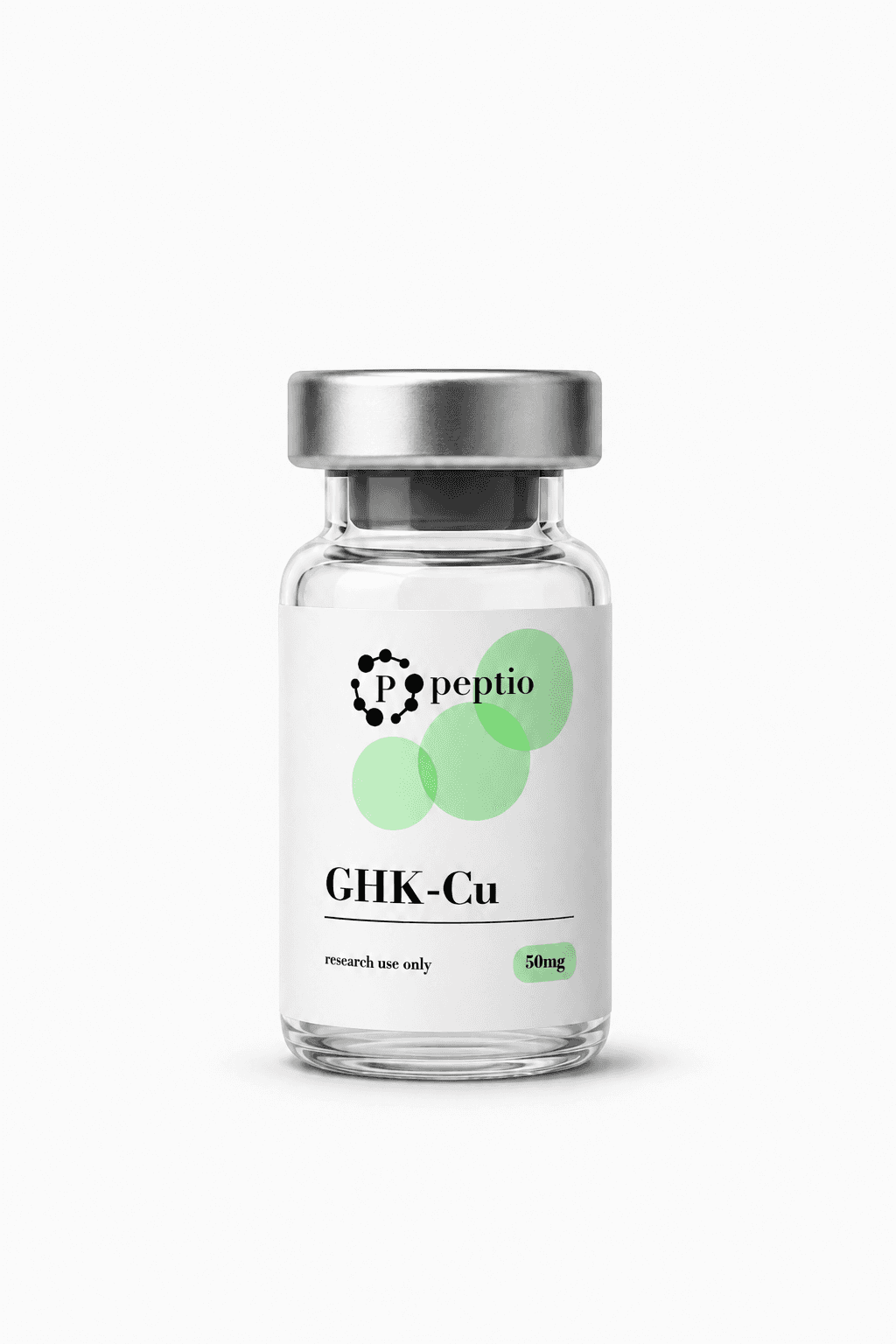
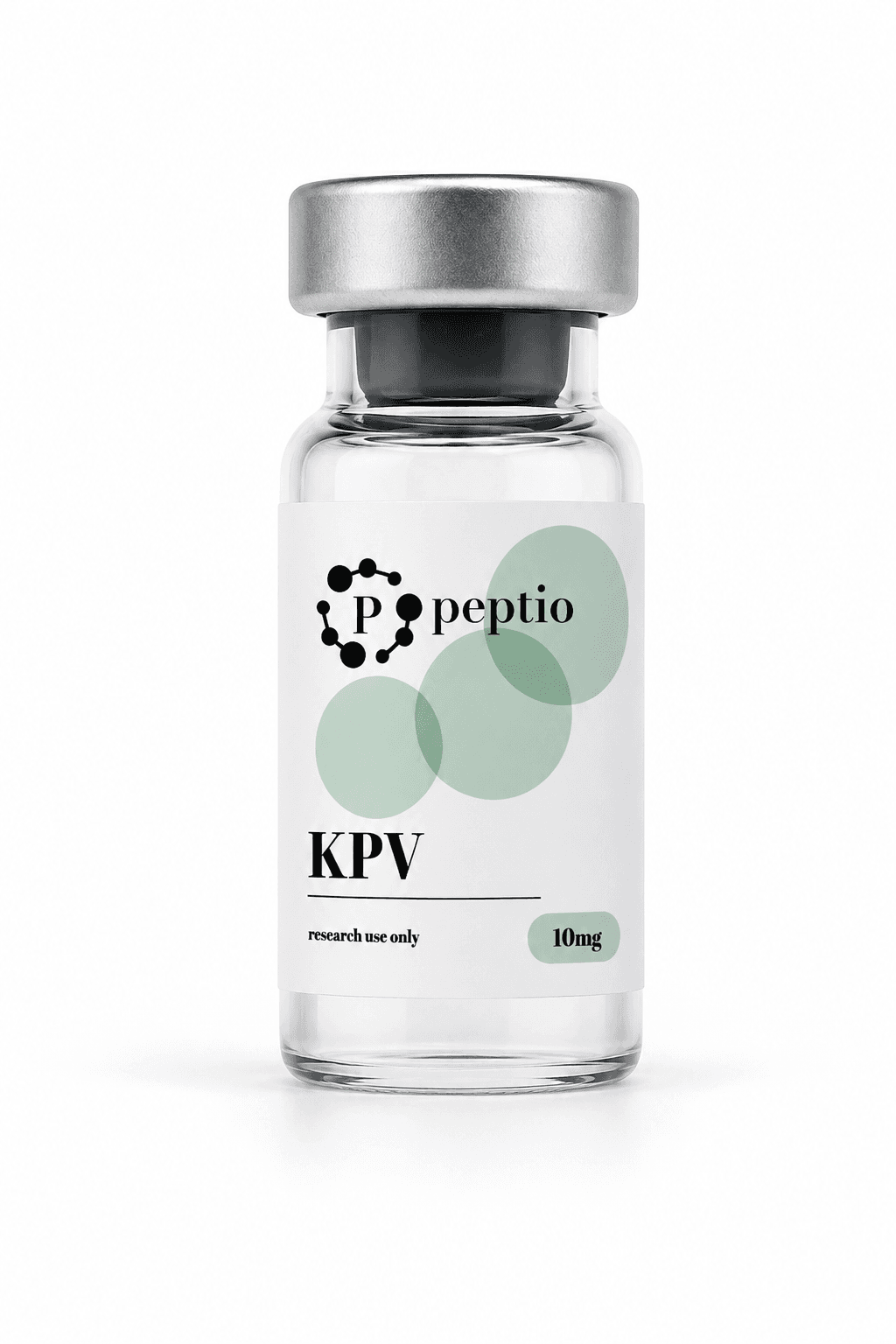
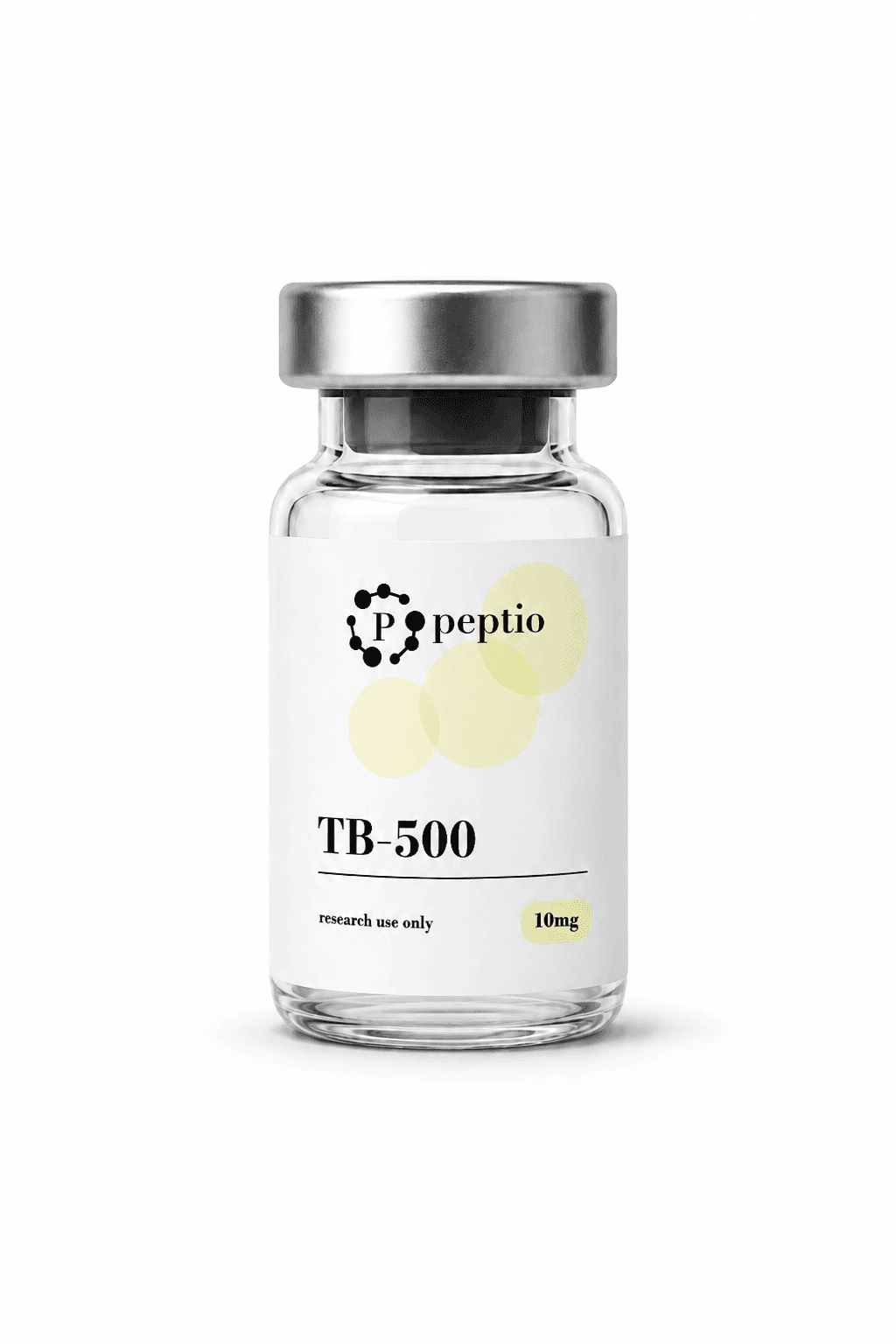
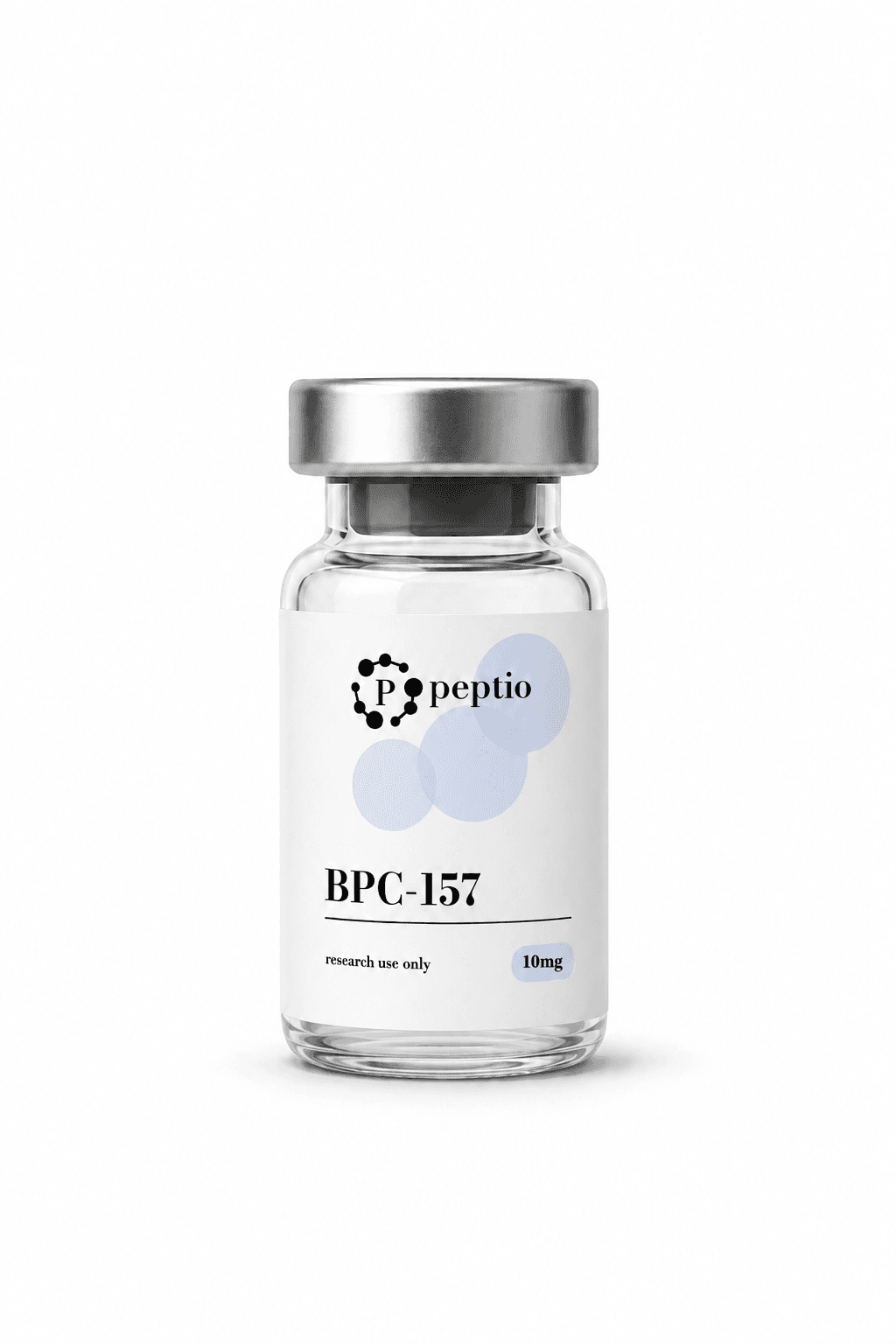
A sealed vial of lyophilised powder, in a 5 mg or a 10 mg size. Both are the same material; the difference is the mass in the vial, not the concentration — concentration is set later, by how much solvent is added.
Each batch is released against a certificate of analysis from an independent issuer, and the batch number printed on the vial matches the number on that certificate. Checking those two against each other is the most useful thing to do with a delivery. The purity, form, storage condition and molecular weight recorded for the current batch are in the specifications above.
Handling is the same as for every other compound in the catalogue. The handling protocol below covers storage temperatures, solvent choice and the concentration calculation.
Research use only
BPC-157 is an unapproved compound with no marketing authorisation in any jurisdiction, and it is prohibited in sport. Peptio is not a pharmacy and supplies it for research use only — not for human or veterinary consumption. Everything reported on this page comes from published studies and describes the animals, the cultured cells and, in one small retrospective series, the patients those studies examined; none of it is guidance for use in people.
Every compound Peptio ships arrives as a sealed vial of lyophilised powder. Freeze-drying is what keeps it stable in transit: with the water removed and the vial closed, the peptide keeps far longer than it would in solution. The protocol below applies to all of them, and it is the same protocol whichever compound is in the vial.
The steps that matter most happen in the first few minutes after a vial is opened, and in how the prepared solution is labelled afterwards. A vial with no recorded solvent volume is a vial with no known concentration, and no amount of care later recovers that.
01
Inspect on arrival
Check that the crimp seal and stopper are intact and that the powder cake is dry and unbroken. Compare the batch number printed on the vial with the number on the certificate of analysis. A cake that has slumped into a film, or a vial that arrives loose in its packaging, is worth photographing before anything else is done to it.
02
Equilibrate before opening
Let a vial taken from cold storage stand sealed until it reaches room temperature. Opening cold glass in a warm room pulls condensation onto it, and moisture is the one thing a desiccated powder is being protected from.
03
Add the solvent
Direct the solvent slowly down the inner wall of the vial rather than onto the cake, then let it dissolve on its own and swirl gently until the solution runs clear. This takes a minute or two, and it is not helped by shaking.
04
Label, then refrigerate
Write the date, the solvent and the exact volume added onto the vial before it goes anywhere. Keep the prepared solution cold and out of direct light, and check that it is still clear each time it is used.
| Correct | Common mistake |
|---|---|
| Direct the solvent down the inner wall of the vial and let the cake dissolve on its own. | Drive the solvent onto the powder in a fast stream. |
| Swirl gently until the solution runs clear. | Shake or vortex the vial — mechanical agitation and foaming degrade peptide structure. |
| Let a vial from cold storage reach room temperature while it is still sealed. | Open a vial straight out of the freezer, and pull condensation into a product that is kept dry on purpose. |
| Label every prepared vial with the date, the solvent and the volume added. | Rely on memory — two vials that look identical at 2–8 °C can hold two different concentrations. |
| Draw through the stopper with a fresh sterile needle each time. | Prise off the crimp seal; an open vial cannot be kept sterile. |
| Keep prepared solution cold and shielded from light between uses. | Leave a reconstituted vial standing at room temperature on the bench. |
| Look at the solution before every use and confirm it is clear. | Use a solution that has turned cloudy or thrown a visible particle. |
Solvent volume sets the concentration
The mass of peptide in a vial is fixed at manufacture. The only variable is how much solvent goes in, and it changes every measurement that follows — 2 mL instead of 1 mL halves the concentration. Confirm the vial's usable capacity before adding anything, since a 2 mL vial will not take 3 mL, and write down the volume you actually added.
Questions
5.0
1 reviews
No reviews yet.