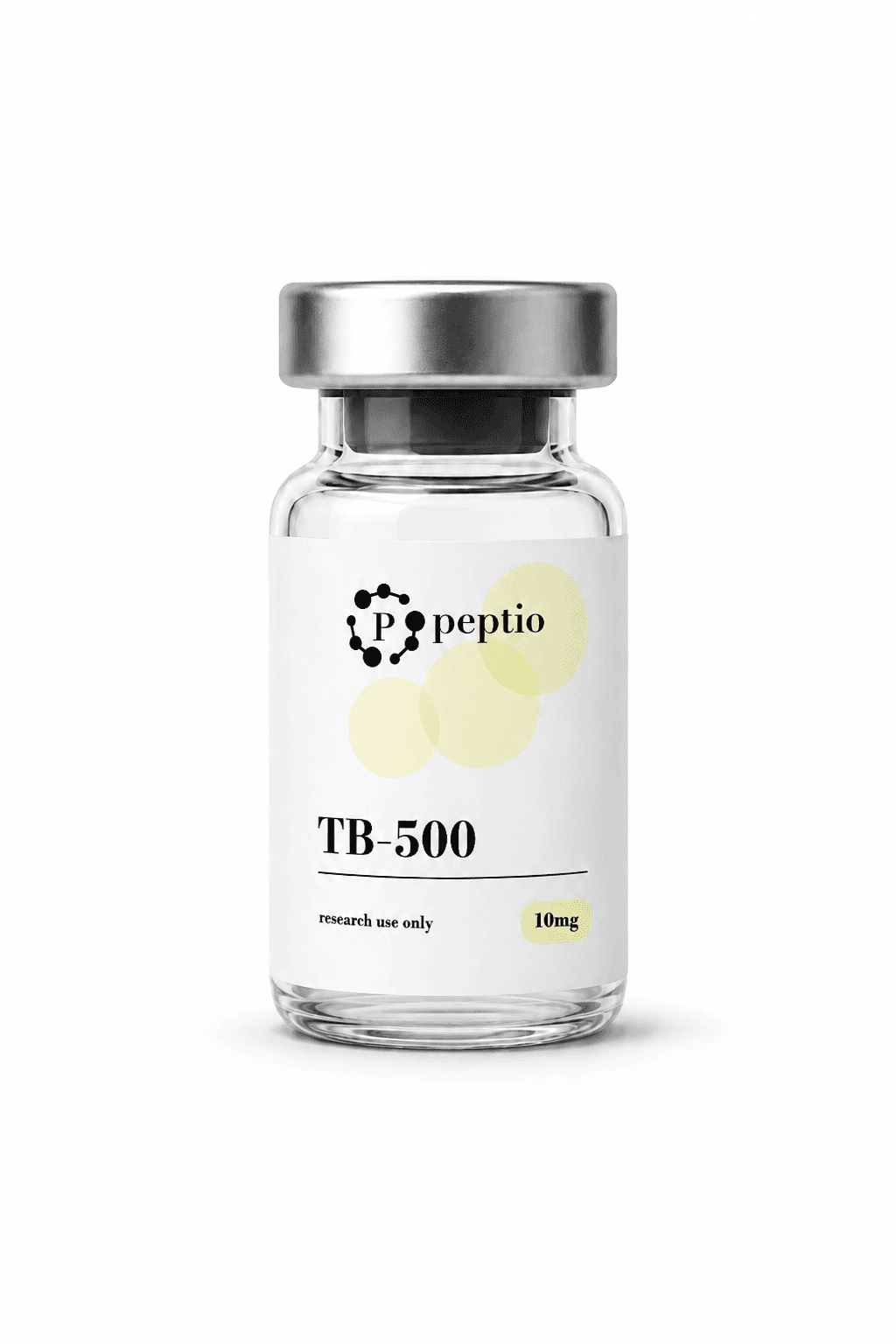
In stockBestseller
For research use only · Not for human consumption
80 ng/mL
Plasma GHK reported at age 60
about 200 ng/mL at age 20 · human plasma (1)
16.44
Copper(II) binding constant, log K
human albumin 16.2 · same review (2)
98.5%
Median ulcer area closure, topical gel
diabetic plantar ulcers · vehicle 60.8% (3)
1973
First isolated from human plasma
Pickart and Thaler, Nature New Biology (4)
GHK is a tripeptide — glycyl-L-histidyl-L-lysine, three amino acids and nothing more — and unlike most of this catalogue it was not designed. Pickart and Thaler isolated it from human serum in 1973, describing an activity in the albumin fraction that changed how old liver tissue behaved in culture (2, 4).
It does not hold steady across a lifetime. The review literature reports a plasma level of about 200 ng/mL at age 20, falling to about 80 ng/mL by age 60 (1). That decline is the reason the peptide is discussed in an ageing context at all, and it is worth being exact about what it is: an observation about a concentration in plasma, not a demonstration that restoring that concentration does anything.
The copper is not an additive. GHK binds copper(II) with a reported binding constant of log K 16.44, above the 16.2 reported for the high-affinity copper site on plasma albumin, and the same review describes GHK taking up copper held at that albumin site (2). The proposal, from the earliest work onward, is that the peptide functions as the complex GHK-Cu rather than as the bare tripeptide, and that the copper's redox activity is silenced while the tripeptide holds it (2). That is why the vial contains a copper complex, and why the molecular weight in the specifications above is the complex's rather than the peptide's.
GHK-Cu holds no marketing authorisation as a medicine. It is a long-standing cosmetic ingredient and a heavily studied research compound, and the controlled human record behind it is small and topical. Every figure on this page describes what a published study measured.
GHK
The tripeptide
Glycyl-L-histidyl-L-lysine — glycine, histidine and lysine, in that order. It occurs in human plasma, where it was first identified in the albumin fraction in 1973 (2, 4). On its own it is simply a peptide; the histidine and the free terminal amine are what give it a site that will hold copper.
Cu(II)
The copper it carries
The reported binding constant is log K 16.44, higher than the 16.2 reported for the high-affinity copper site on plasma albumin, so the review describes GHK as able to take copper up from albumin (2). Copper held this way is described as redox-silenced — copper that can be moved without the reactivity a free ion brings (2).
GHK-Cu
The complex, which is what was studied
From the earliest work the proposal has been that the peptide acts as a complex with copper(II) rather than as the free tripeptide (2). The controlled human trial cited on this page used the copper complex, applied topically (3), and the copper complex is what Peptio supplies.
The one controlled human read-out cited here is a multicentre, randomised, evaluator-blinded, vehicle-controlled trial of a topical GHK-Cu gel in diabetic neuropathic ulcers, published in Wound Repair and Regeneration in 1994. Every participant was on the same standardised wound-care protocol — sharp debridement at entry, daily topical application, pressure-relieving footwear and diabetes education — and the gel was compared against its own vehicle inside that protocol (3).
The trial reported a median area percentage closure of 98.5% in plantar ulcers treated with the gel, against 60.8% for vehicle (p < 0.05). The separation was wider in ulcers larger than 100 mm² at entry: a median of 89.2% against −10.3% for vehicle (p < 0.01). Ulcer infection was recorded in 7% of plantar ulcers treated with the gel immediately after debridement, against 34% on vehicle (p < 0.05). The published abstract does not state how many patients were enrolled or across how many centres, so the trial's size is not reproduced here (3).
The rest of the human literature is smaller and cosmetic in endpoint: topical creams tested on facial and periorbital skin over twelve weeks, in groups of 71, 41 and 67 women, against placebo or comparator creams (2). Those are appearance studies of a cream on skin assessed for photodamage. They are reported here as the shape of the literature, and they license no conclusion about anything outside their own endpoint.
GHK's second literature is not clinical at all. Pickart and colleagues have published a series of reviews arguing that GHK shifts the expression of a large number of human genes, drawing on public expression-profiling datasets and grouping the affected pathways under tissue remodelling, antioxidant response, inflammation and DNA repair (1).
That work is reported here without numbers. The gene counts quoted across those reviews differ from one another, and this page does not print a figure it cannot pin to a single stated source. What the reviews describe is a broad expression signature attributed to the peptide in cell-based datasets — not an effect measured in people, and not a result from any of the human studies above.
No head-to-head study exists between these three, and nothing in this table is a numeric comparison. The rows describe where each peptide comes from, what pathway the cited literature proposes for it, how far that literature has got, and by what route it was given in the work cited. Read along a row, not down a column.
| Parameter | GHK-Cu | BPC-157 | TB-500 |
|---|---|---|---|
| Origin | A tripeptide that occurs naturally in human plasma, isolated from the albumin fraction in 1973 (4) | A pentadecapeptide described as a naturally occurring gastric peptide (5) | A synthetic peptide reproducing part of thymosin β-4, the actin-sequestering protein present in mammalian cells (6) |
| Proposed pathway in the cited work | Carries copper(II) as a complex and is discussed in connection with connective-tissue remodelling signalling (1, 2) | Angiogenesis, collagen synthesis, fibroblast activity and nitric oxide signalling, in preclinical models (5) | Sequestration of G-actin, with reported effects on cell migration, blood vessel formation and inflammatory signalling (6) |
| Evidence stage in the work cited here | One controlled human trial with a wound-healing endpoint (3), plus small topical human studies with cosmetic endpoints (2) | A systematic review of 36 studies published 1993–2024: 35 preclinical, 1 clinical (5) | A review of animal models — dermal, corneal and cardiac repair (6) |
| What the human record cited amounts to | A multicentre randomised vehicle-controlled trial in diabetic neuropathic ulcers, under a standardised wound-care protocol (3) | One retrospective report, in which 7 of 12 patients described relief beyond six months after intra-articular injection for chronic knee pain; the review found no clinical safety data (5) | No human trial of the fragment is cited on this page; the review cited covers animal work on the parent protein (6) |
| Route in the cited studies | Topical gel in the controlled trial (3); topical cream in the smaller studies (2) | Intra-articular injection in the single clinical report; preclinical routes in the animal work (5) | Topical and systemic, in the animal models reviewed (6) |
| Status here | Not an approved medicine; supplied for research use only | Not an approved medicine; supplied for research use only | Not an approved medicine; supplied for research use only |
Sources. (1) Pickart L, Margolina A. Regenerative and Protective Actions of the GHK-Cu Peptide in the Light of the New Gene Data. Int J Mol Sci. 2018;19(7):1987. (2) Pickart L, Vasquez-Soltero JM, Margolina A. GHK Peptide as a Natural Modulator of Multiple Cellular Pathways in Skin Regeneration. Biomed Res Int. 2015;2015:648108. (3) Mulder GD, Patt LM, Sanders L, et al. Enhanced healing of ulcers in patients with diabetes by topical treatment with glycyl-l-histidyl-l-lysine copper. Wound Repair Regen. 1994;2(4):259–269. (4) Pickart L, Thaler MM. Tripeptide in human serum which prolongs survival of normal liver cells and stimulates growth in neoplastic liver. Nat New Biol. 1973;243(124):85–87. (5) Vasireddi N, Hahamyan H, Salata MJ, et al. Emerging Use of BPC-157 in Orthopaedic Sports Medicine: A Systematic Review. HSS J. 2025;21(4):485–495. (6) Philp D, Kleinman HK. Animal studies with thymosin beta, a multifunctional tissue repair and regeneration peptide. Ann N Y Acad Sci. 2010;1194:81–86. GHK-Cu holds no marketing authorisation as a medicine in any jurisdiction.
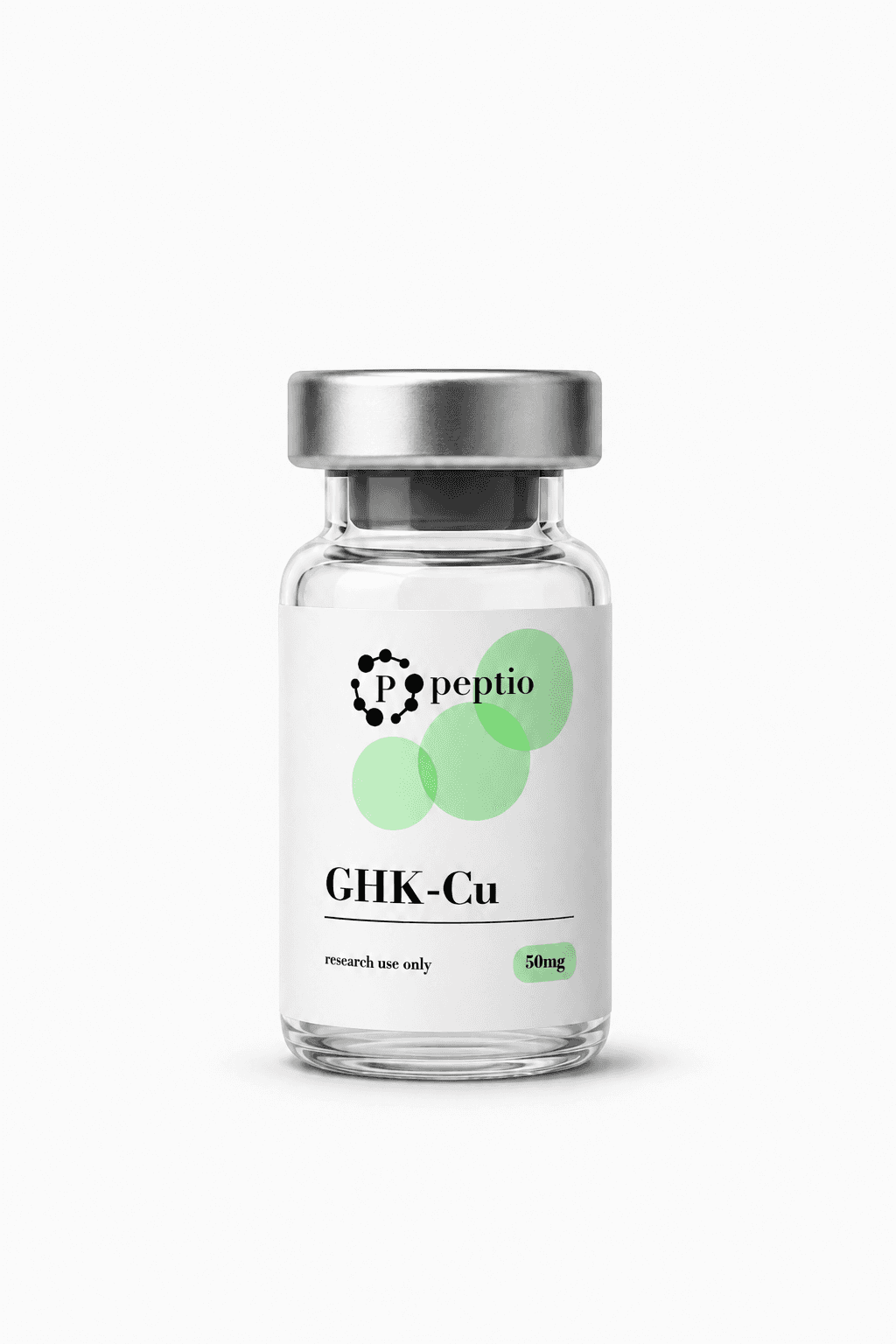
A sealed vial of lyophilised powder, in a 50 mg or a 100 mg size. Both are the same material; the difference is the mass in the vial, not the concentration — concentration is set later, by how much solvent is added. These two sizes sit an order of magnitude above the 5 mg and 10 mg vials most of this catalogue uses, so a concentration worked out for another product does not carry over to this one.
Each batch is released against a certificate of analysis from an independent issuer, and the batch number printed on the vial matches the number on that certificate. Checking those two against each other is the most useful thing to do with a delivery. The purity, form, storage condition and molecular weight recorded for the current batch are in the specifications above — the molecular weight is the copper complex's, not the free tripeptide's.
Handling is the same as for every other compound in the catalogue. The handling protocol below covers storage temperatures, solvent choice and the concentration calculation.
Research use only
GHK-Cu holds no marketing authorisation as a medicine in any jurisdiction. Peptio is not a pharmacy and supplies it for research use only — not for human or veterinary consumption. Every figure on this page comes from a published study and describes what that study measured in its own participants or models. The human work cited here was topical throughout; none of it is guidance for use in people, and nothing on this page should be read across to any other route.
Every compound Peptio ships arrives as a sealed vial of lyophilised powder. Freeze-drying is what keeps it stable in transit: with the water removed and the vial closed, the peptide keeps far longer than it would in solution. The protocol below applies to all of them, and it is the same protocol whichever compound is in the vial.
The steps that matter most happen in the first few minutes after a vial is opened, and in how the prepared solution is labelled afterwards. A vial with no recorded solvent volume is a vial with no known concentration, and no amount of care later recovers that.
01
Inspect on arrival
Check that the crimp seal and stopper are intact and that the powder cake is dry and unbroken. Compare the batch number printed on the vial with the number on the certificate of analysis. A cake that has slumped into a film, or a vial that arrives loose in its packaging, is worth photographing before anything else is done to it.
02
Equilibrate before opening
Let a vial taken from cold storage stand sealed until it reaches room temperature. Opening cold glass in a warm room pulls condensation onto it, and moisture is the one thing a desiccated powder is being protected from.
03
Add the solvent
Direct the solvent slowly down the inner wall of the vial rather than onto the cake, then let it dissolve on its own and swirl gently until the solution runs clear. This takes a minute or two, and it is not helped by shaking.
04
Label, then refrigerate
Write the date, the solvent and the exact volume added onto the vial before it goes anywhere. Keep the prepared solution cold and out of direct light, and check that it is still clear each time it is used.
| Correct | Common mistake |
|---|---|
| Direct the solvent down the inner wall of the vial and let the cake dissolve on its own. | Drive the solvent onto the powder in a fast stream. |
| Swirl gently until the solution runs clear. | Shake or vortex the vial — mechanical agitation and foaming degrade peptide structure. |
| Let a vial from cold storage reach room temperature while it is still sealed. | Open a vial straight out of the freezer, and pull condensation into a product that is kept dry on purpose. |
| Label every prepared vial with the date, the solvent and the volume added. | Rely on memory — two vials that look identical at 2–8 °C can hold two different concentrations. |
| Draw through the stopper with a fresh sterile needle each time. | Prise off the crimp seal; an open vial cannot be kept sterile. |
| Keep prepared solution cold and shielded from light between uses. | Leave a reconstituted vial standing at room temperature on the bench. |
| Look at the solution before every use and confirm it is clear. | Use a solution that has turned cloudy or thrown a visible particle. |
Solvent volume sets the concentration
The mass of peptide in a vial is fixed at manufacture. The only variable is how much solvent goes in, and it changes every measurement that follows — 2 mL instead of 1 mL halves the concentration. Confirm the vial's usable capacity before adding anything, since a 2 mL vial will not take 3 mL, and write down the volume you actually added.
Questions
0.0
0 reviews
No reviews yet.